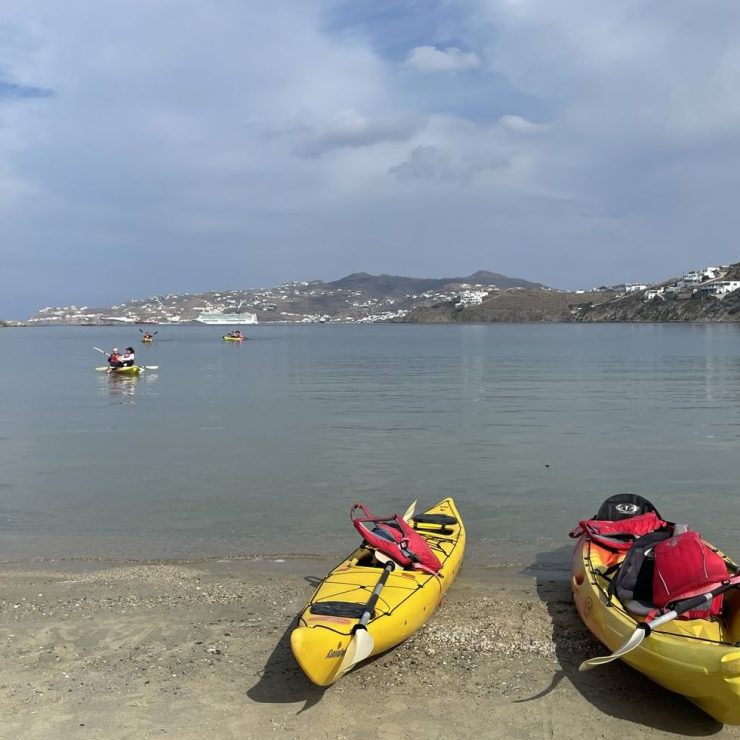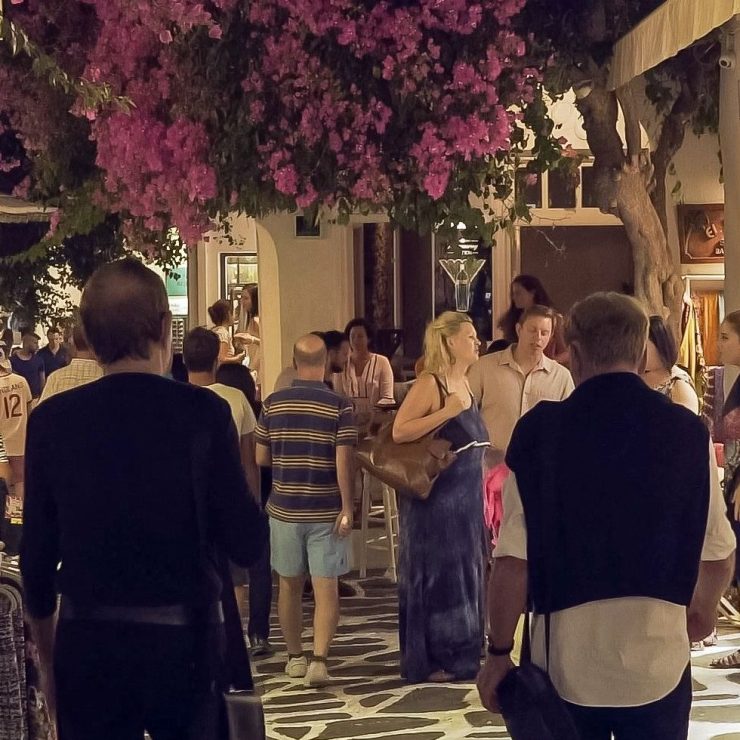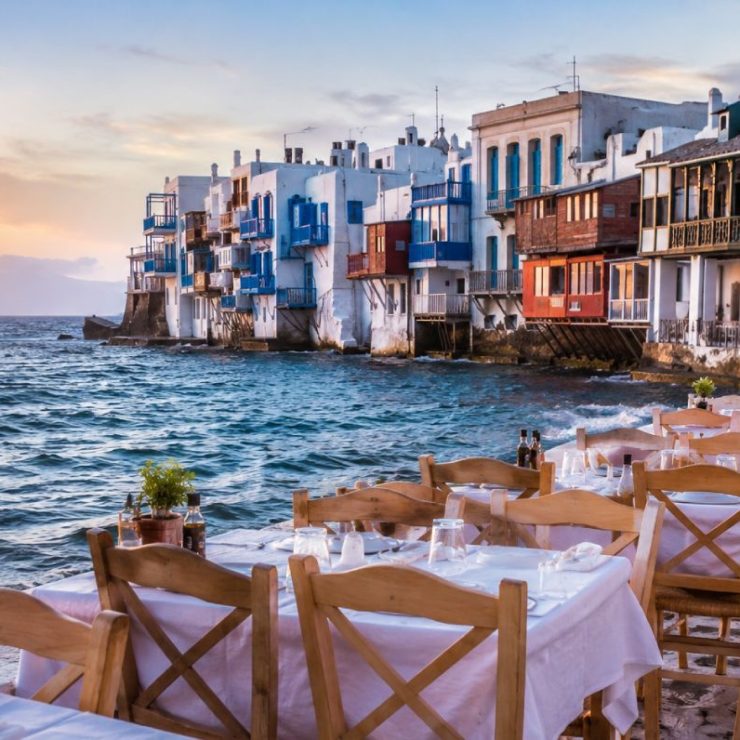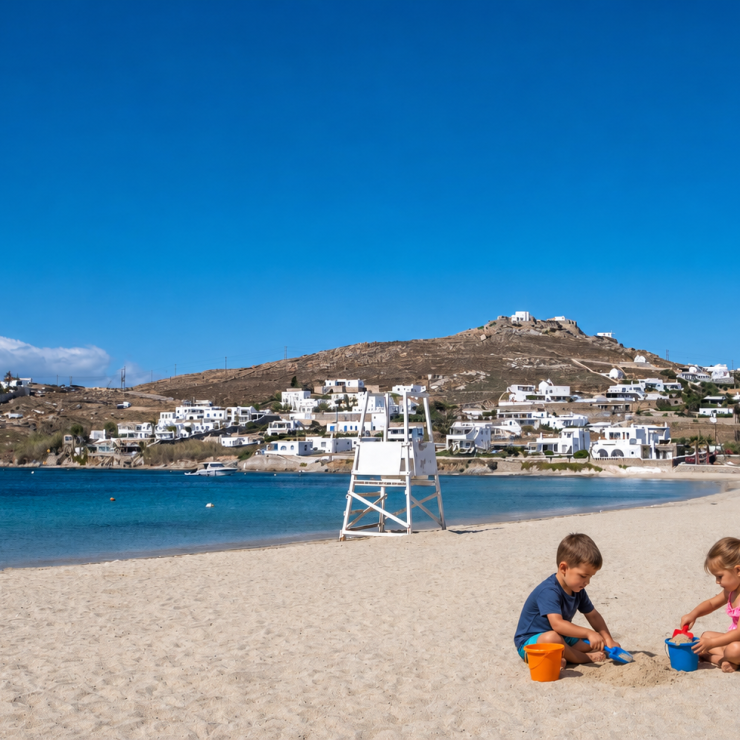
The intense focus on lifestyle and nightlife makes us overlook the cultural identity of Mykonos, which remains in the shadow of the bright lights. Behind the cosmopolitan beach bars and famous villas lies an island with deep roots, centuries of history, and an artistic aura that awaits those who decide to turn into those alleys where no music can be heard.
Delos, the center of the ancient world
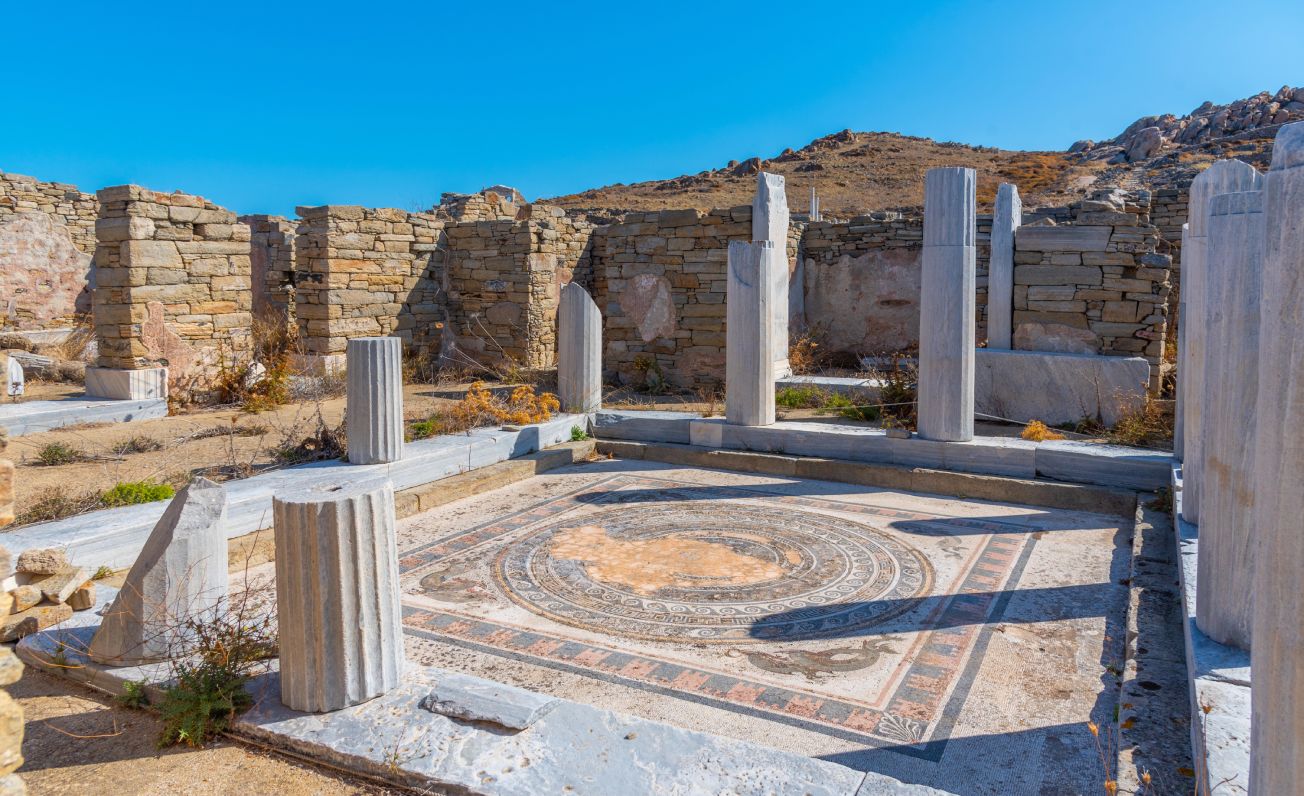
You cannot talk about the culture of Mykonos without mentioning Delos. Just a stone’s throw away by boat, this uninhabited island is one of the most important archaeological sites in Greece and a UNESCO World Heritage Site. In ancient times, it was the religious and commercial center of the Aegean, the place where, according to mythology, light, Apollo, and Artemis were born.
Visiting Delos is a truly thrilling experience. Walking between the Stoa of the Naxians, the famous Street of the Lions, and the Theater Quarter, you can feel the energy of a place that was once bustling with life, trade, and worship. The impressive mosaics in the houses of Dionysus and the Dolphins bear witness to the wealth of its inhabitants, while the climb up Kynthos Hill offers a panoramic view of the Cyclades that explains why the ancients considered this spot the center of their circle.
The architectural humility of Paraportiani
In the Castle area, where the white of the lime meets the deep blue of the sea, stands Panagia Paraportiani. This is not a typical church, but a unique complex of five churches built on top of or next to each other over the centuries, starting in the 14th century.
Its architecture is a global phenomenon. Its form appears organic, as if sculpted by the air, salt, and water, without sharp angles or geometric precision. This “plasticity” inspired great creators, such as Le Corbusier, who saw in Paraportiani the ultimate expression of architectural sincerity. It is the point where popular belief met aesthetic perfection through the need for protection, as its name derives from the fact that it was located next to the secondary gate (paraporti) of the medieval castle.
Museums that narrate the life of the Aegean
To understand how the people of Mykonos lived before the advent of mass tourism, a visit to the museums of Chora is essential. Each one is a time capsule that preserves the daily life and history of the Cyclades:
- Archaeological Museum: One of the oldest in Chora (built in 1902), it houses the famous “Pithos of Mykonos” an ancient vessel with the oldest depiction of the Trojan Horse, as well as unique finds from Rhenia.
- Aegean Maritime Museum: Housed in a traditional captain’s house, it brings to life the strong tradition of Mykonian captains, with replicas of ships from the pre-Minoan period to the present day.
- Folklore Museum: Located in the Castle area, it offers an authentic glimpse into the interior of an 18th-19th century Mykonian house, with furniture, tools, and embroidery that tell the story of the harsh but beautiful life of the locals.
Ano Mera and the Monastery of Tourliani
If you want to find the tranquility of the past, Ano Mera is the ideal destination. It is the only village in the interior of the island that retains its traditional structure and a sense of old Greece that is rare in the coastal zone. At its heart stands the Monastery of Panagia Tourliani, founded in 1542. The monastery is the religious center of the island, but also a monument of art. Its impressive marble bell tower and elaborate wood-carved iconostasis, made in Florence in 1775, are works of unparalleled artistry. A visit here is ideally combined with a stop at the village square, where traditional cafes serve local delicacies such as louza and kopanisto cheese, far from the hustle and bustle of city life.
Windmills and the legacy of hard work
The windmills of Mykonos, towering over Little Venice, are now the most photographed spot on the island. However, their cultural value goes far beyond being a backdrop for selfies. Until the early 20th century, these mills were the driving force behind the local economy. They used the inexhaustible energy of the meltemi winds to grind grain brought in from all the surrounding islands, making Mykonos a crucial stop on the maritime bread route. The Bonis Mill, which operates as an agricultural museum, allows visitors to see the mechanism inside and understand the ingenuity of traditional technology. The preservation of these buildings is a tribute to man’s relationship with the elements of nature—the air and the sea.
The modern artistic side of the island
Culture in Mykonos is not a static concept that only concerns the past. For decades, the island has been a magnet for international artists, intellectuals, and creators. As early as the 1930s, personalities such as Kazantzakis and Picasso were captivated by its light. Today, this dialogue continues through:
- International art galleries: Spaces such as the Rarity Gallery and Eden Gallery bring works by contemporary artists of international renown to the streets of Chora.
- Outdoor exhibitions: Artistic interventions are often organized in public spaces, combining contemporary sculpture with the Cycladic landscape.
- Music festivals: From classical music to quality jazz bands, the island’s cultural calendar is rich, as long as you know where to look.
Mykonos’ greatest cultural treasure is the way the light falls on the curves of the houses and the wisdom of the way of life that survives beneath the surface. It is the hospitality of its people, the tranquility of the gardens of Agios Panteleimonas, and the smell of freshly baked bread from traditional wood-fired ovens. Visiting these places is not just a tourist activity, but a mystical experience that connects us with the true face of Mykonos. The ideal choice for feeling like a local during your stay is Corfos Pearl Studios, just 2.5 kilometers from the center of Mykonos Town. It is only 120 meters from Korfos Beach, known for its water sports, and 180 meters from the idyllic beach of Ornos, one of the most popular destinations for relaxation and culinary delights.