Mykonos is one of the few Greek islands closely associated with contemporary gastronomy. In Chora and along the beaches, there are restaurants serving flavors from around the world, but that doesn’t mean local cuisine has taken a back seat. On the contrary, it lives on in family-run kitchens, traditional taverns, and menus based on Cycladic produce rather than international trends.
This is the first thing anyone looking for places to eat in Mykonos should know. The island doesn’t have dozens of local dishes. However, it does have a few very distinctive specialties. If you spot them on the menu, it’s much easier to distinguish a menu that stays true to Mykonian tradition from one that could be found at any tourist destination.
Mykonos cuisine starts with local ingredients
Unlike other islands where cooked dishes predominate, in Mykonos products grown or ripened on the island itself play an important role. Limited arable land, strong winds, and the need to preserve food have shaped a cuisine that makes the most of ingredients that stand the test of time. That’s why many orders start with a platter full of small appetizers instead of a single large dish. It’s not just a way of serving food. It’s the easiest way to experience the island’s flavors all in one meal.
Kopanisti is usually the first dish to arrive at the table. It is a soft cheese with a strong, tangy flavor, which has been recognized as a PDO product in the Cyclades. It has a strong character, which is why it’s almost always served in small portions, on bread or barley rusks.
You’ll often find louza served alongside it. It is a cured meat made from pork tenderloin that is salted, seasoned with spices, and left to air-cure for several weeks. It is cut into very thin slices and pairs perfectly with local cheeses without overpowering their flavor.
An appetizer that says a lot about Mykonian cuisine
If there is one dish that epitomizes the local cuisine, it is “mosta”. The recipe is simple. A large barley rusk is lightly moistened, then topped with a ripe tomato, crumbled cheese, olive oil, and oregano. In some cases, capers are added or, depending on the season, grapes to balance the intensity of the cheese.
If you’re not used to very strong flavors, the “mostra” version usually works best, because the tomato and olive oil make the dish more balanced.
What you will find on the traditional menus
Mykonos cuisine isn’t based on extensive lists of traditional recipes, as is the case in other parts of Greece. Instead, it relies on simple ingredients and dishes that reflect the season.
In the taverns of Chora and Ano Mera, you’re likely to find vegetable pies and onion pies, made with thin phyllo dough and fillings that vary depending on the time of year.
The same goes for local cheeses. In addition to kopanisti, many restaurants serve xinotyro, either as a side dish or grated over pasta or pies. It has a milder flavor and is usually preferred by those who find kopanisti too strong.
Seafood, of course, always has a place on the table. Fish, octopus, squid, and shrimp appear on the menu at almost every seafood tavern, but not all are of the same quality. Ask what the catch of the day is and whether the fish is fresh or frozen.
Where to find Mykonos’ local cuisine
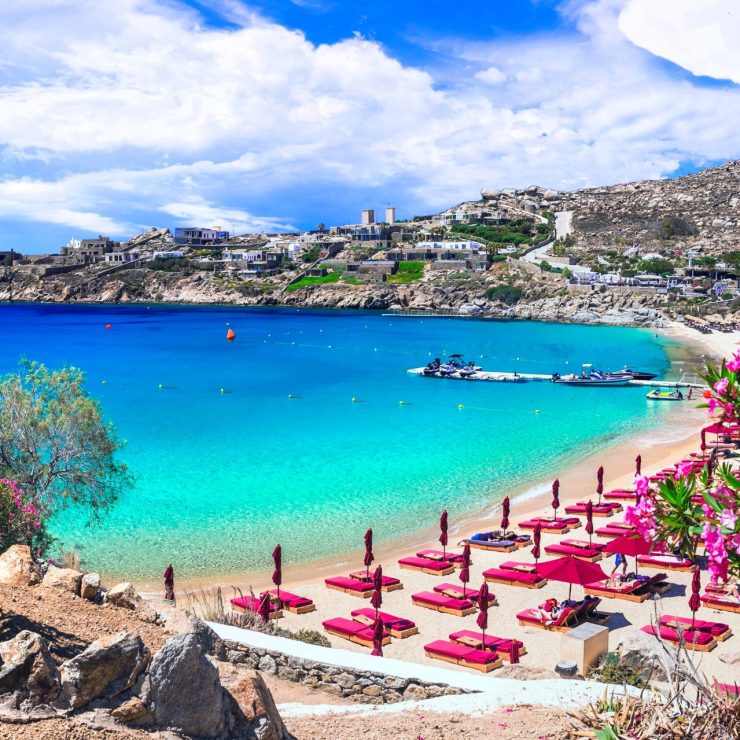
After spending the morning at one of Mykonos’ most beautiful beaches, stopping for a meal is the best way to discover a different side of the island.
The answer isn’t “the most famous restaurants.” Mykonos is home to some of Greece’s most renowned culinary establishments, but many of them serve international cuisine. If you want to experience the island’s authentic flavors, however, it’s worth looking a little further afield.
Chora offers the widest variety of restaurants. Amid the modern menus, there are still establishments that preserve traditional Mykonian recipes and use ingredients from the Cyclades. You don’t need to look exclusively for a sign that says “traditional taverna.” It’s more helpful to open the menu and see what it offers.
If you find yourself in Ano Mera to visit the Church of Panagia Tourliani, it’s worth combining your visit with a meal at one of the family-run taverns in the area. There you’ll find family-run taverns that have been in business for years. They serve daily specials alongside classic Cycladic dishes.
Mykonos’ local cuisine isn’t hidden away. It’s just not always on the first page of the menu. All you need to do is take a few minutes to see what each restaurant really has to offer, rather than choosing based solely on its view or popularity.
And at the end of the meal?
Local pastries aren’t as well-known as Mykonos cheeses or cured meats, but they too have their place at the table. Instead of elaborate desserts, recipes based on just a few ingredients—such as honey, cheese, and almonds—dominate.
The most characteristic is melopita. It’s made with soft cheese, usually flavored with cinnamon, and drizzled with honey just before serving. It’s a dessert that’s more commonly found in traditional taverns than in large pastry shops, so you might not find it everywhere.
In the island’s pastry shops, you’ll more easily find almond cookies. They’re made from ground almonds, sugar, and rose water, and are one of the sweets most commonly associated with the Cyclades. If you’re looking for something that’s easy to transport, they’re also one of the most common choices for those who want to take a taste of the island home with them.
In some shops, you’ll also find “rafiolia”, small fried pastries filled with cheese and served with honey or cinnamon. They aren’t on every menu and are often made only at certain times of the year, so it’s worth asking if they’re available.
Mykonos’ cuisine is all in the details
Mykonian cuisine isn’t based on complicated recipes or a wide variety of dishes. It’s based more on the ingredients, seasonality, and the way they’re combined on the table. A good plate of kopanisti cheese, a little louza, a dish of fresh fish, or a slice of melopita at the end of the meal can give a much clearer picture of the local cuisine than an impressive menu with dozens of options.
Often, the best choices aren’t the ones that stand out in photos or on social media, but those prepared daily with whatever ingredients are available.
The right place to stay makes this experience even easier. By staying in a location that offers easy access to both Chora and the rest of the island, you can explore different neighborhoods and get to know Mykonian cuisine at your own pace. At Corfos Pearl Studios, you’ll find the ideal base to plan your outings, discover the flavors that make Mykonos stand out, and experience the island like a local.